Canadas-Public-Forests-Dont-Belong-to-Multinational-Lumber-Corporations
Canada’s Public Forests Don’t Belong to Multinational Lumber Corporations
By Maureen Hutchinson-Parker | StopTheSprayCanada.ca
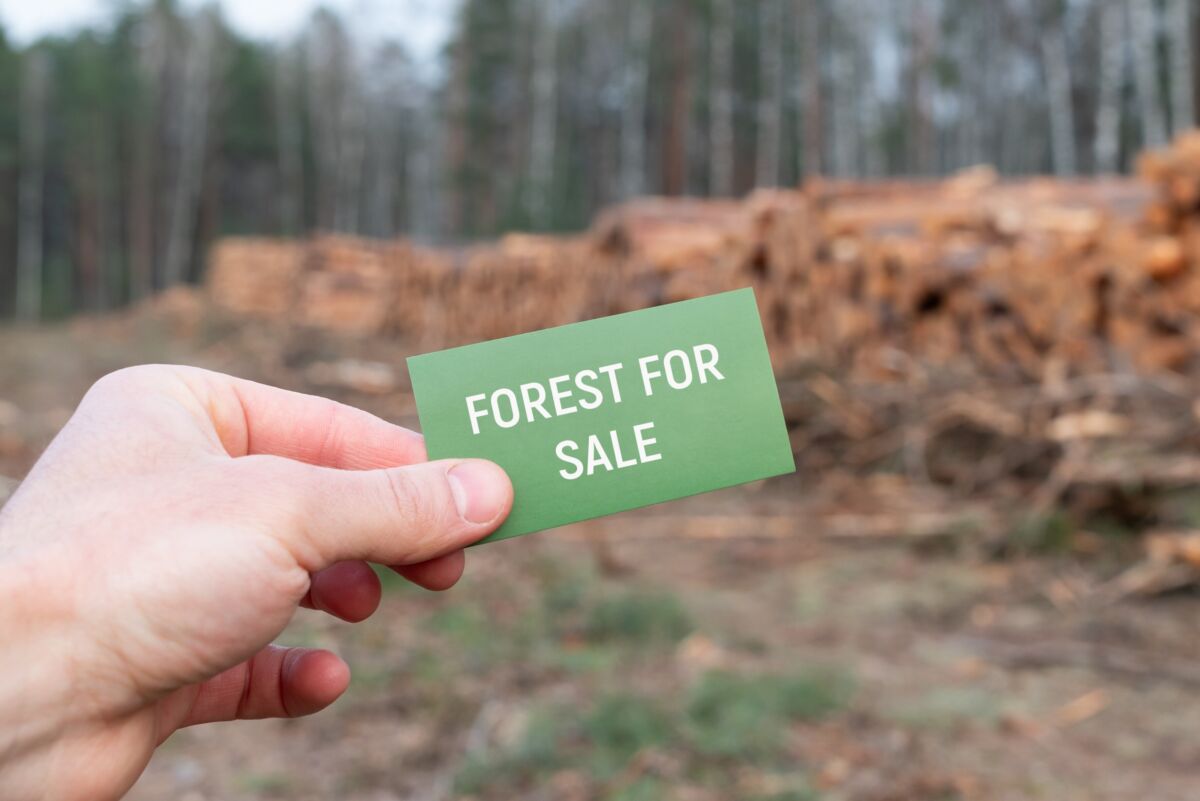
Canada’s public forests are being clear-cut, then chemically treated with herbicides to kill the aspen, birch, berry bushes, shrubs and other vegetation that naturally begins growing back. Why? Because those plants and trees compete with the commercially valuable conifers the forest industry wants to grow. In other words, nature starts rebuilding a diverse forest, and Chemical Forestry steps in to decide that nature is growing the wrong forest.
The justification we hear again and again is that herbicide spraying is “cost-effective.”
Cost-effective for whom?
For approximately 70 years, Canadian forests have been subjected to chemical vegetation control. In the early decades, forestry programs used chemicals including 2,4-D and 2,4,5-T—the two herbicidal components of Agent Orange. As concerns about dioxin contamination and human health grew, the use of 2,4,5-T ended around 1980, but Chemical Forestry remained. Glyphosate eventually became the dominant herbicide used, along with other herbicides in some areas. The chemicals change. The spraying continues.
And people fought it from the beginning. Residents, Indigenous communities, hunters, trappers, foragers and families watched forests being clear-cut and then saw helicopters return to spray chemicals over the land as it tried to grow back. The obvious question was: “It is bad enough that the forest has been clear-cut, but now you are going to poison what is trying to regenerate?” They worried about their water, wildlife, berries, medicinal plants, pollinators, traditional foods and chemical exposure. They protested. They wrote letters. They passed formal resolutions demanding that governments cease spraying.
Generations later, people are still fighting the same fight.
The first formal resolution we have documented is dated September 1989, when the Chiefs of Nishnawbe Aski Nation opposed Ontario “unilaterally” conducting chemical spraying on their lands and demanded an immediate end to the practice. This was seven years after Canada’s Constitution recognized and affirmed Aboriginal and treaty rights under section 35. Yet the spraying continued.
When people challenge the province about Chemical Forestry, they are told to go to the feds because herbicides are registered by Health Canada. So people go to the federal government, only to be told that forestry is provincially managed. Then the province points to industry. Industry points to its permits and licences. Foresters point to provincial policy. Round and round it goes, and somehow everyone has an excuse while nobody takes responsibility for protecting the forest from the poison. Welcome to the Blame Circle.
Meanwhile, Canada has already studied this issue. In 1999, after years of examining the state of the boreal forest, a Senate subcommittee released Competing Realities: The Boreal Forest at Risk. It concluded, “All herbicide and chemical pesticide use in the boreal forest should be phased out as soon as possible.” The report recognized that forests are more than timber supplies and need to be protected. It devoted an entire chapter to “Aboriginal Realities” and addressed Aboriginal and treaty rights and the responsibilities governments have toward First Nations and Métis people.
Québecers gained protection when Québec stopped herbicide spraying in public forests in 2001, and industry adapted. Other provinces continued spraying. Forestry companies across Canada have now had a quarter of a century to develop and use non-chemical approaches.
Yet the practice continues in other provinces because it is considered “cost-effective.”
When governments and industry talk about herbicides being cost-effective, we need to ask whose costs are being counted and whose are being ignored. Is it cost-effective for wildlife feeding in treated forests? For pollinators? For an Indigenous family gathering traditional foods and medicines? For someone picking blueberries? For the hunter, trapper or angler? For communities concerned about their watersheds and wildfire? For future generations inheriting the decisions we make today?
And after more than two decades of proof that non-chemical forestry is possible, the costs of finally transitioning away from Chemical Forestry should not be blamed on the people demanding protection now. The public should not be threatened with economic losses because the practice was allowed to continue for so very long.
Governments are supposed to manage our public forests in the public interest. Forests are not farms. And forest composition matters to fire behaviour. Natural Resources Canada says deciduous forests burn more slowly after green-up and rarely support crown fires, while coniferous forests can support extreme crown fires that are often uncontrollable. As Canada faces rising temperatures, longer fire seasons and a long-term increase in the area burned, why are we poisoning biodiversity to favour commercially valuable conifers?
Ontario itself acknowledged in 2009 that unnecessary pesticide exposure warranted action when it introduced its cosmetic pesticide ban, restricting the cosmetic use of pesticides containing chemicals including glyphosate and 2,4-D. Protecting children and families from unnecessary pesticide exposure around homes, parks and schools was considered important. Yet forestry remained exempt. Rural and Indigenous communities continued asking why these chemicals could still be applied across public forests that are home to wildlife and pollinators, and where people depend on clean water, and on healthy forests to hunt, fish, trap, gather medicines and harvest forest foods.
Why did protection from chemical exposure matter in one postal code but seemingly not another?
And now, in 2026, the questions surrounding glyphosate have become impossible to dismiss.
In December 2025, the influential Williams, Kroes and Munro glyphosate safety review, published in 2000, was formally retracted following serious concerns about undisclosed Monsanto involvement and the integrity of the paper. Safe Food Matters has continued its legal challenge arising from Health Canada’s 2017 re-evaluation of glyphosate, which renewed its registration for another 15 years. In a separate case, the organization and its allies challenged Health Canada’s 2022 renewal of the glyphosate-based herbicide Mad Dog Plus—and they won. In February 2025, the Federal Court found the decision unreasonable and set the renewal aside, requiring the federal pesticide regulator to reconsider the decision and properly address newer scientific evidence. Mad Dog Plus was later discontinued, and Health Canada’s Pest Management Regulatory Agency cancelled its registration and began a phase-out.
To top it all off, in March 2026, international scientists and experts meeting in Seattle issued new warnings about glyphosate and glyphosate-based herbicides, raising concerns about health effects beyond cancer, including reproductive, endocrine, neurological, metabolic, liver and kidney effects.
People have fought Chemical Forestry for generations. Indigenous leaders and municipalities have passed resolutions demanding that it stop. Canada’s own Senate recommended phasing chemical herbicides out of the boreal forest as soon as possible. Québec proved a quarter of a century ago that forestry can continue without chemical herbicide spraying in public forests. A major glyphosate safety review has now been retracted. Court challenges continue. Scientists are issuing new warnings.
And still, in 2026, the spraying continues.
At what point does somebody in government finally say that perhaps we should stop poisoning a forest to grow a forest?
The issue is no longer that governments do not know people object. They know. Industry knows. Foresters know. Politicians know. The federal government knows. The provinces know. They have known for generations.
“Cost-effective” for industry is not a magic phrase that makes everything acceptable. Something can be cheaper for a corporation while carrying costs that never appear on its balance sheet. The public bears those costs.
Communities bear them. Our waterways and ecosystems bear them. Wildlife bears them. Future generations bear them.
Enough with the Blame Circle. Enough pointing fingers. Enough hiding behind registrations, licences and policies.
It is time for governments to find their backbone, protect our forests and Stop the Spray.
Take action at StopTheSprayCanada.ca and contact the decision-makers.




Explore More...