Why-the-Modern-World-Feels-Like-a-Scripted-Performance
Why the Modern World Feels Like a Scripted Performance
By Joe Mandigo
Many people today move through their daily lives with a nagging, persistent sense of unreality. Events feel overacted, headlines seem pre-scripted, and social interactions often mirror a predictable screenplay rather than spontaneous human connection. If you have felt that “something is off,” you are not experiencing a delusion; you are noticing the transition from a world of direct experience to a “mediated” reality.
We are no longer living in a reality grounded in what we see, touch, and do. Instead, we reside within a symbolic layer where reality is being replaced, layer-by-layer, by interpretations, avatars, and personality costumes. In this environment, a headline replaces a deep understanding, a political label replaces a complex human being, and symbols become more dominant than the truths they were meant to represent. When symbols rule, truth becomes optional—it only needs to be repeatable, recognizable, and socially enforced.
The goal of this analysis is to unveil the hidden mechanisms of this “simulation.” By identifying the six layers of mediation and conditioning that dictate modern life, we can move from being reactive participants to oriented observers. Once you begin to see the machinery behind the performance, the manipulation stops working. You can stop reacting on cue and begin to reclaim a sense of authentic reality.
Layer One: The Brand as Ownership
The term “brand” is used so ubiquitously in modern discourse that its original, violent meaning has been obscured. The word finds its roots in the Old Norse word bronder, which literally means “to burn.” Historically, this referred to the practice of burning a permanent mark into livestock so that ownership was obvious and sorting the animals was simple.
In the modern simulation, you are the one being branded. This process has shifted from commercial products to the individuals themselves. We no longer simply buy a product; we buy a “story about ourselves.” Whether it is a commercial brand, a political narrative, or a social movement, these stories are designed to “burn” a mark of ownership into your identity.
This allows the system to engage in “audience segmentation,” knowing exactly what you will defend, what you will buy, and who you will hate. The brand is not your identity; it is a sorting mechanism used by the system to manage its human livestock.
“Brand comes from the old Norse word bronder, and it means to burn—specifically, it means to burn a permanent mark into livestock so ownership is obvious and sorting animals out is easy. You are being branded by advertisers, political narratives.”
Layer Two: Human Conditioning and the Death of Authenticity
Once the brand is established, the simulation maintains control through Layer Two: Human Conditioning. People are no longer encouraged to learn; they are trained. This training is facilitated through “conditioning signals”—metrics, algorithms, and visibility rewards. In this digital environment, whatever gets rewarded gets repeated, and whatever gets ignored eventually disappears.
To survive in this system, individuals begin to simplify and exaggerate themselves, flattening their complex personalities into something “shareable” and performative. We stop asking, “Is this how I feel?” and start asking, “How will this be received?” This creates a profound psychological rupture. When your external performance consistently fails to match your internal experience, the universal human response is a deep sense of hollowness. This is the death of authenticity, where the “mask” or “personality costume” becomes the only part of the self allowed to exist in public view.
Layer Three: The Collapse of Information into Content
The simulation survives by replacing genuine information with “content.” While these terms are often used interchangeably, they serve opposite functions. Information answers questions and creates understanding. Content is designed to stimulate responses and occupy attention.
The primary function of the endless stream of content in your feed is to prevent silence. Silence is dangerous to the simulation because silence is where thinking happens. By maintaining a state of perpetual urgency and emotional escalation, the engagement cycle ensures that nothing ever truly resolves. Resolution would end the engagement, so the system is designed to keep you in a loop of “participation” that feels like awareness but produces no actual clarity. Everything feels urgent—yet nothing changes.
Layer Four: Identity Control and the Moral Emergency
To prevent a stable identity from forming—which might resist manipulation—the system keeps the public in a constant state of moral emergency. Every week, a new crisis or outrage is prepackaged for consumption, complete with approved language and emotions. This leads to identity fragmentation, in which individuals accept ready-made moral frames because they lack the time to slowly form values through reflection.
In this layer, morality shifts from an internal compass to an external display. Signaling replaces moral reasoning. Virtue is no longer a set of lived actions; it becomes a “lapel pin” or a “sticker”—a visible marker used to prove alignment with a group. This performative ethics provides a sense of relief to many by removing personal responsibility. You no longer have to think through or weigh complex ethical issues; you only have to align with the pre-approved script. Because these “costumes” are digital and symbolic, they can be updated remotely by the system, explaining why people can switch radical positions overnight without a single new fact.
Layer Five: Narrative Warfare and the Global Hero’s Journey
To bypass human logic entirely, the simulation utilizes a “Mythic Structure” that targets our ancient, evolutionary wiring. Complex global issues are distilled into a template known as the Global Hero’s Journey, which assigns three specific, prepackaged roles:
- The Hero (your side): The righteous group or “tribe.”
- The Villain (the other side): The dehumanized enemy whom you have full permission to hate.
- The Victim (the justification): The emotional catalyst that makes the conflict necessary.
Once these roles are assigned, logic is no longer required because archetypes bypass human reasoning. This is how the simulation radicalizes people: not through facts, but through story. This structure turns politics into a “Left versus Right” illusion—two simplified tribes and two emotional markets that keep the audience fighting one another while the actual sources of instability remain unexamined.
“Narratives come with heroes and enemies, moral certainty and urgency, and full-blown permission to hate people. One detail gets amplified, another gets buried, context gets removed—until complexity completely disappears.”
Layer Six: The Theatre of Power
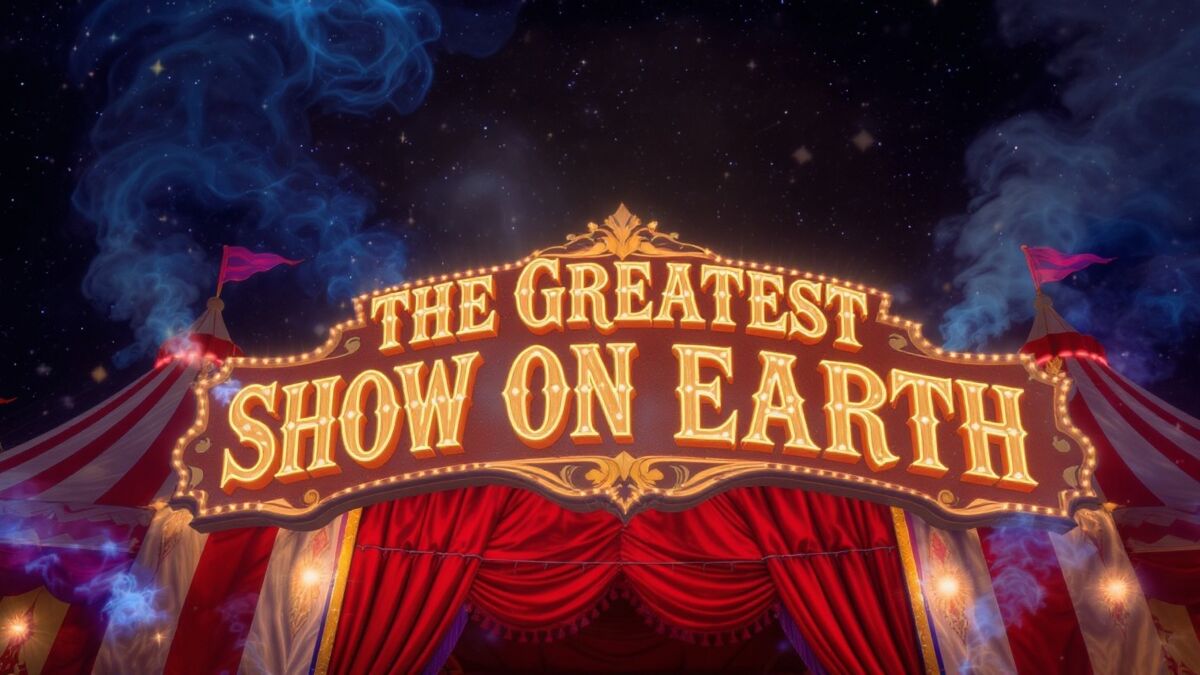
The final layer is the Theatre of Power. This concept posits that modern politics is no longer a system for governance; it is a stage for visibility. Events are engineered as props to maintain engagement. We see this in dramatic televised hearings that, in the source’s blunt estimation, “accomplish jack shit.” We see it in scandals that cycle endlessly without consequence—a primary example being the lack of actual criminals going to jail in the Epstein case.
When politics is treated as theatre, right and wrong are replaced by team loyalty. The audience asks, “Is this our side?” rather than “Is this right?” This numbness we feel toward corruption is not apathy; it is conditioning. The theatre acts as a distraction machine, absorbing public attention and emotional energy through a constant stream of drama that releases nothing of value, ensuring the system’s underlying machinery continues to operate untouched.
Seeing the Machinery
Recognizing the simulation does not make one superior or immune to its effects, but it provides orientation. When you understand the layers—the branding, the conditioning signals, the content loops, the performative morality, and the mythic narratives—the manipulation begins to lose its power.
The world feels “off” because it is covered in a layer of symbolic noise. However, reality was always there, waiting beneath the fake symbols and personality costumes. Once you see the machinery, the performance becomes obvious, and the “scripted” nature of modern life loses its grip on your emotions. The most important step in reclaiming your reality is to ask a difficult question:
Now that you see the layers of the simulation, what part of your “identity” is actually yours, and what part was burned into you?
This article is based on a video released by human behavioural science expert, Chase Hughes, called: “We Are Livestock. It Was All a Lie.” See the full video at: youtu.be/e6g40CYvcb0




Explore More...