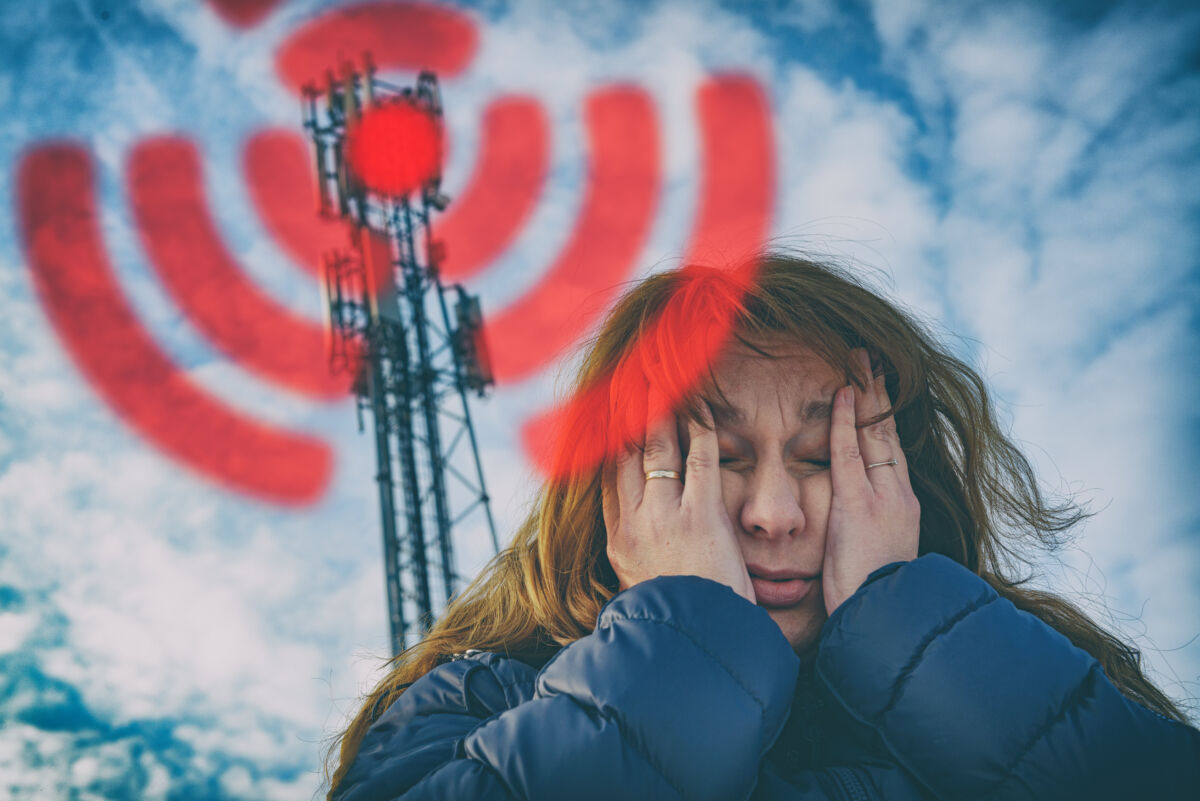
Cell-Towers-Without-Consent
Cell Towers Without Consent
Silenced Communities and Automatic Approvals
By Margreet van den Berg
Brookfield Asset Management “owns” the backbone of the global economy and is one of the largest investors in global infrastructure. That backbone includes data centres, power generators, power lines, fibre and cell towers, all essential for AI. In May this year, the government of Canada released its “National Strategy for an Electrified Canadian Economy: Powering Canada Strong,” and in June its “National Artificial Intelligence Strategy: AI for All.” Mark Carney and company are aligned with Brookfield’s views and aspirations.
Cell towers are essential for AI. Is that why Minister Mélanie Joly’s Innovation, Science and Economic Development Canada (ISED) proposes sweeping changes to cell tower approval processes in Canada, intended to drastically reduce local say while giving telecommunications companies almost free rein over when and where cell towers are installed? ISED’s motivation? Red tape reduction. Since when is public consultation red tape?
In May 2026, ISED opened a consultation on its proposals: the first round closed on July 16, and the second round is open until August 25. Most people, including municipalities, are largely unaware of both proposals and the consultation. In early July, Canadians for Safe Technology (C4ST) started a petition calling for the consultation to pause and for an independent, comprehensive public review process, similar in scope to one done 20 years ago. Consider signing C4ST’s petition:
https://c4st.org/eng/petition_ised.php
Squelch Local and Municipal Voices Opposing New Cell Towers
ISED intends to reduce public participation; weaken municipal authority and local decision-making; and reduce transparency and accountability. C4ST’s petition provides details on how. Cell towers less than 15 metres won’t need any approval. For taller towers, the community will be informed only through an online portal and a sign posted at the proposed site. No more notification packages by mail or announcements in local newspapers. ISED decides which concerns are “acceptable,” reasonable and relevant.
Concerns about health and visual impacts are excluded. Only residents living within three times the height of a proposed tower would receive responses to concerns. Others, including outside experts—medical or scientific—would be excluded from that process. Municipal cell tower siting protocols will be replaced by a one-size-fits-all national process. Instead of 120 days, municipalities—Land Use Authorities—would have only 45 days to review proposals and consult with residents.
Failure to respond within that timeframe means automatic approval. ISED would no longer keep records of communications; proponents would control the records. What about access to information requests and privacy concerns?
Engaging or Enraging a Community?
Even today, most Canadians and municipal councils are unaware that cell towers cannot be placed just anywhere. They require a local consultation and decision-making process, based on the current CPC-2-0-03 protocol or local siting protocols. Land Use Authorities and municipalities must always vote concurrence or non-concurrence on a tower.
Until now, proponents—wireless carriers or infrastructure companies proposing a cell tower, such as Rogers, Bell, TELUS and Shared Tower—have been required to mail or hand-deliver notification packages to nearby residents, schools, public institutions and community gathering places, and to neighbouring land-use authorities, businesses and property owners within a radius of three times the tower height.
They also have to announce their plans in a local newspaper, but ISED wants to get rid of that. Too old-fashioned! Yet ISED and Statistics Canada fall under the same Minister of Industry, Mélanie Joly.
What does Statistics Canada do when it wants Canadians to fill in the Census? It sends paper mail—more than once. And if you don’t fill in either the digital or paper questionnaire, a human might come knocking on your door.
So, if the government really wants to hear from you, it uses old-fashioned paper mail and humans. Imagine proponents coming to your door, making sure you know they are planning a cell tower close to you!
The 2004 Townsend report, an in-depth review conducted under then-Minister of Industry Allan Rock, deemed leaving citizens out of cell tower decision-making a primary driver of community outrage. The proposed changes do exactly that: water down public engagement. Does the government not care? Who really wrote ISED’s proposals?
Why Weaken Public and Local Say?
In 2016, Klaus Schwab of the World Economic Forum wrote a book and coined the term “the 4th Industrial Revolution” (4IR). The idea of 4IR serves as a roadmap for businesses and politicians alike. Cell towers are central to this roadmap. Buzzwords such as Digital Transformation, Innovation, Resilience, Sovereign and AI for All should convince people that nothing should get in the way of laying the groundwork to make it happen. During the 2020 COVID lockdowns, a large number of cell towers and small-cell transmitters were installed while people watched from behind their windows. Since then, cell towers have become year-round Christmas trees with ever more ornaments. This spiderweb-type infrastructure keeps growing. When will it be enough?
The lines between the public and private sectors are blurred. An example of the revolving-door mechanism: Navdeep Bains stepped down as Minister of Industry in 2021, then popped up as Rogers’ chief corporate affairs officer in 2023. Rogers is one of Canada’s Big Telecom Three, along with Bell and TELUS. And now, lo and behold, Mr. Bains wants to become the leader of the provincial Liberal Party in Ontario.
ISED’s current proposals favour the industry. Why? Has the pushback grown over the years? More municipal councils are not automatically approving cell towers and have voted non-concurrence. An increasing number of Canadians are engaging in the consultation process, attending municipal council meetings, informing councils and residents about the potential health effects of cell tower radiation and its impact on property values, expressing concern about environmental impacts, asking for absolute proof of the need for yet another tower, and pointing out how proponents fail to follow the existing protocol and try to duck essential questions.
Health Canada Says It’s Safe
Health concerns are one of the main reasons Canadians do not want a cell tower near their homes, schools, churches, playgrounds, sports grounds and workplaces. Yet precisely this concern is dismissed by ISED. It is too absurd for words. ISED has adopted Health Canada’s obsolete safety guidelines, Safety Code 6, and washes its hands of the crowd. ISED hides behind the claim that exposure to radiofrequency radiation is safe, 24 hours a day, seven days a week, 365 days a year. Of course, when Health Canada says something is safe, it must be so.
But how do both departments explain away the fact that insurance companies exclude health damage from radiofrequency radiation from their insurance policies? How do they explain away the fact that insurance companies consider RF radiation a pollutant, comparing it with asbestos and expecting the damage to appear after a long latency? How do they explain away the fact that cell tower building companies, such as American Tower, openly admit in their annual reports that they might not have “adequate insurance coverage”?
Why does the government of Canada not inform Canadians that the WHO’s IARC, the International Agency for Research on Cancer, classified radiofrequency radiation as a Class 2B possible carcinogen in 2011? And that former members of this IARC, such as Lennart Hardell from Sweden, call for a reclassification based on up-to-date and clear evidence of carcinogenicity?
How does Health Canada explain that even one of its own, James MacNamee, was part of a World Health Organization-commissioned study, published April 25, 2025, that found “high certainty” in the evidence linking radiofrequency radiation exposure to cancer in animals?
How does Health Canada explain that telecom companies worldwide warn their shareholders about potential threats, such as public health concerns and litigation, to their “business and financial performance”? Bell states it might have to retrofit its wireless infrastructure and handsets to achieve compliance if regulations change.
“Sooner or later we have to change the way we live,” warned Per Segerbäck in a 2018 Dutch documentary called Ubiquity. Segerbäck is a former Ericsson mobile phone pioneer, injured by his work, and now a board member of Europeans for Safe Connections. The documentary is one of many about people around the world who can no longer live in this sea of ubiquitous, synthetic forms of radiation. People around the world move away from wireless communication technology, either by force majeure or by choice. They do not want to be forced, tracked, traced or radiated 24 hours a day, seven days a week, 365 days a year. They do not consent.
What to Do?
ISED claims that wireless services are vital and “much like roads or electricity,” and that “Canadians expect these services to be ubiquitous, high quality and affordable.” Yes, communication services are vital, but only wired services should be ubiquitous: fibre to the premises. Fibre to the premises offers a high-quality alternative: faster, more secure, more resilient, healthier and more environmentally friendly than much of the wireless services. Canadians deserve high-quality, ubiquitous fibre to the premises, comparable to roads and electricity. It is a question of priorities—government priorities.
What is happening in Canada is also unfolding around the world, including south of our border, where a movement has begun—www.704nomore.org—“envisioning a future without federal overreach where local governments and communities are empowered to make informed decisions about cell tower and antenna siting based on all relevant factors, including health and environmental effects.”
Local voices are not red tape. Whether people have health concerns, property-value concerns, concerns about the effect of cell tower radiation on the natural environment, or concerns about fire and falling hazards, no federal government should tell Canadians which concerns are reasonable and relevant. And those concerns are based on new information that Mark Carney’s government refuses to acknowledge, even daring to classify it as misinformation.
Canada’s government and Brookfield both ignore the fact that they promote an uninsured technology. Please consider signing the Canadians for Safe Technology petition to pause this consultation and call for an independent, much more thorough review. Tell your neighbours and councillors about it. Talk to or write to your MP and your provincial representative. Turn any potential community rage into constructive action.
For anyone who wants to let the government know, consider participating in the second round of comments in ISED’s consultation. Find it at:
Editor’s note: If you wish to read the first round of comments, you can find them at https://ised-isde.canada.ca/site/spectrum-management-telecommunications/en/learn-more/key-documents/consultations/comments-received-consultation-amendments-tower-siting-process-and-decision-roaming-tower-sharing








Explore More...