Supreme-Court-Grants-Leave-on-Emergencies-ActAppeal
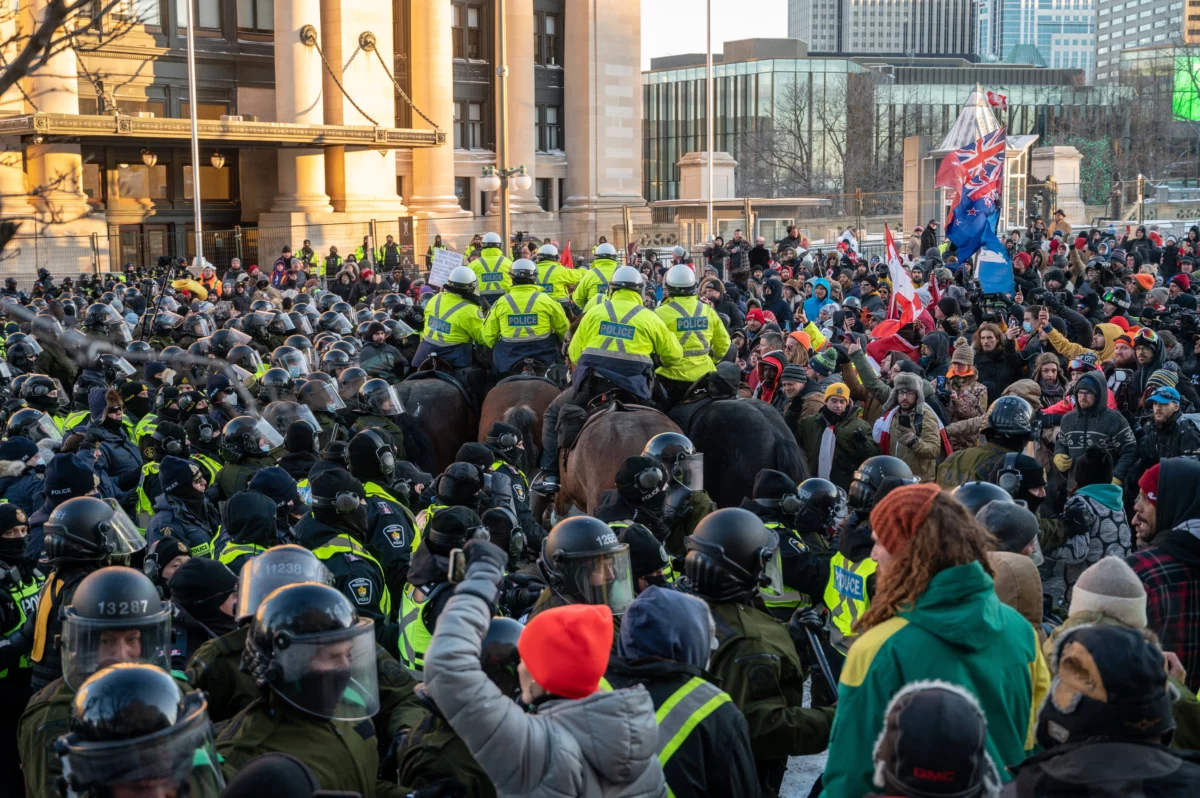
Ottawa, Ontario, Canada - February 18, 2022: Trucker Freedom Convoy 2022 - Police confrontation with protestors Downtown Ottawa. Photo by: Michel Elzo
Supreme Court Grants Leave on Emergencies Act Appeal
By Mir North | Substack.com/@HoldTheFloorNorth
On October 22, 2026, the Supreme Court of Canada agreed to hear the federal government’s appeal in the Emergencies Act challenge filed by the Canadian Constitution Foundation and a few others.
This isn’t a ruling on the case itself; it means the Court will schedule a full hearing and eventually issue a final judgment. Christine Van Geyn, the Interim Executive Director of the Canadian Constitution Foundation, quickly pointed out that the earlier court victories still stand until the Supreme Court decides, especially after an initial report made it sound like the ruling had already happened.
This whole situation started back on February 14, 2022, when the Trudeau government invoked the Emergencies Act in response to the Freedom Convoy protests. Two lower courts already found that the government’s actions were unreasonable and that several measures went against the Charter.
The Federal Court ruled in January 2024, and the Federal Court of Appeal upheld that ruling in January 2026. The Carney government waited until the very last day in March 2026 to ask the Supreme Court to hear the case.
By agreeing to take it on, the Supreme Court will clarify how far these extraordinary powers can go, which will have a big impact on how future governments handle public protests. To understand why this case matters, we need to look back at what happened in early 2022.
The Freedom Convoy and the Invocation of Emergency Powers
In late January and early February 2022, a bunch of truckers and other protesters showed up in Ottawa and at some border crossings to push back against COVID-19 vaccine mandates for truck drivers and related health rules. For about three weeks, downtown Ottawa was taken over by big trucks and demonstrators. Blockades, especially at places like Coutts, Alberta, and the Ambassador Bridge, caused significant economic disruptions. The government called it a public order emergency that couldn’t be handled using regular laws.
On February 14, the Cabinet decided to invoke the Emergencies Act—the first time this has happened since it replaced the War Measures Act. This move gave them some broad powers to deal with the situation. Banks and financial institutions had to freeze accounts tied to the protests without needing a court order first. They set rules limiting travel to protest areas and made it illegal to give money or help that could fuel further unrest.
Public gatherings were restricted, and police got more authority to act. The government claimed the protests posed a threat to national security and important infrastructure and that existing laws weren’t enough. However, critics, including civil rights groups, argued that these actions were over the top and that regular policing would’ve sufficed. These extraordinary measures soon faced tough legal challenges.
The Lower Courts Speak: Unreasonable and Unconstitutional
Justice Richard Mosley of the Federal Court closely examined a challenge brought by the Canadian Constitution Foundation and the Canadian Civil Liberties Association, among others. In a detailed decision from January 2024, he ruled that the Cabinet didn’t have good reason to think there was a “threat to the security of Canada” as defined by the Emergencies Act.
This definition pulls from the Canadian Security Intelligence Service Act, which requires real threats involving serious violence for political, religious, or ideological reasons—like terrorism or attempts to overthrow the government. Mere economic disruption or concerns about potential violence didn’t cut it. Mosley also noted that the situation didn’t reach the level of a national emergency that existing laws couldn’t handle.
In January 2026, the Federal Court of Appeal backed these findings in a unanimous ruling. The judges pointed out that while the blockades and protests were certainly frustrating and disruptive, they just didn’t amount to a threat to national security. They noted that the Act has strict limits to prevent misuse for political convenience.
According to the judges, the real issues in Ottawa were more about policing capabilities and willingness than any legal shortcomings. The appeal court agreed with most of the Canadian Constitution Foundation’s key arguments about the rules for invoking the Act and the implications for the Charter of Rights. The breaches went beyond the threshold issue to specific Charter violations.
Freezing Accounts and Banning Protest: The Charter Costs
The courts pointed out two main Charter violations that couldn’t be justified under section 1. First off, regulations that basically banned people from travelling to or supporting the Freedom Convoy protests across the country messed with our rights to express ourselves and assemble peacefully under section 2.
These rules were way too broad; they included folks who just wanted to voice their disagreement with government policies, not just those causing trouble. The Federal Court of Appeal noted that the government could’ve made the restrictions more specific, targeting certain areas or known offenders instead of imposing a nationwide ban.
On top of that, the economic orders that let banks freeze accounts and share personal financial info with the RCMP and CSIS without any warrants or proper safeguards violated section 8, which protects against unreasonable searches and seizures. The Court noted that giving up private banking information based on a single officer’s gut feeling was a serious matter, especially without the usual checks and balances to protect people’s financial privacy.
These weren’t minor issues either. Both courts felt that these violations didn’t meet the minimal impairment and proportionality standards of section 1. The government has spent millions of taxpayer dollars defending this case, but the lower courts found that the legal standards weren’t met. Now, this sets the stage for a crucial final argument at the Supreme Court.
What’s at Stake for Future Emergencies and Dissent
The Supreme Court hearing will decide whether the Emergencies Act still applies or whether governments can use it to respond to disruptive but peaceful protests. If the government wins, it could make it easier to use emergency powers whenever protests disrupt the economy or strain police resources. On the other hand, if the courts uphold the lower decision, it will make clear that the Act should be used only as a last resort when there are real threats to national security and regular laws won’t cut it.
Christine Van Geyn said the Canadian Constitution Foundation is ready to defend its previous wins, claiming the Act was misused against political opposition that was simply inconvenient. Litigation Director Josh Dehaas said this case will shape how governments handle dissent for years to come.
The Foundation lawyers, Sujit Choudhry and Janani Shanmuganathan, will present the same arguments that worked in the lower courts. Until the Supreme Court makes its ruling—likely not before spring or fall 2027—the Federal Court of Appeal’s decision is what we go by. The outcome will either maintain strict limits on emergency powers or make it easier for future Cabinets to use them when public protests become a hassle.
Originally published at substack.com/@holdthefloornorth






Explore More...