The-World-We-Are-Creating
The World We Are Creating
By Lynn Wilbur
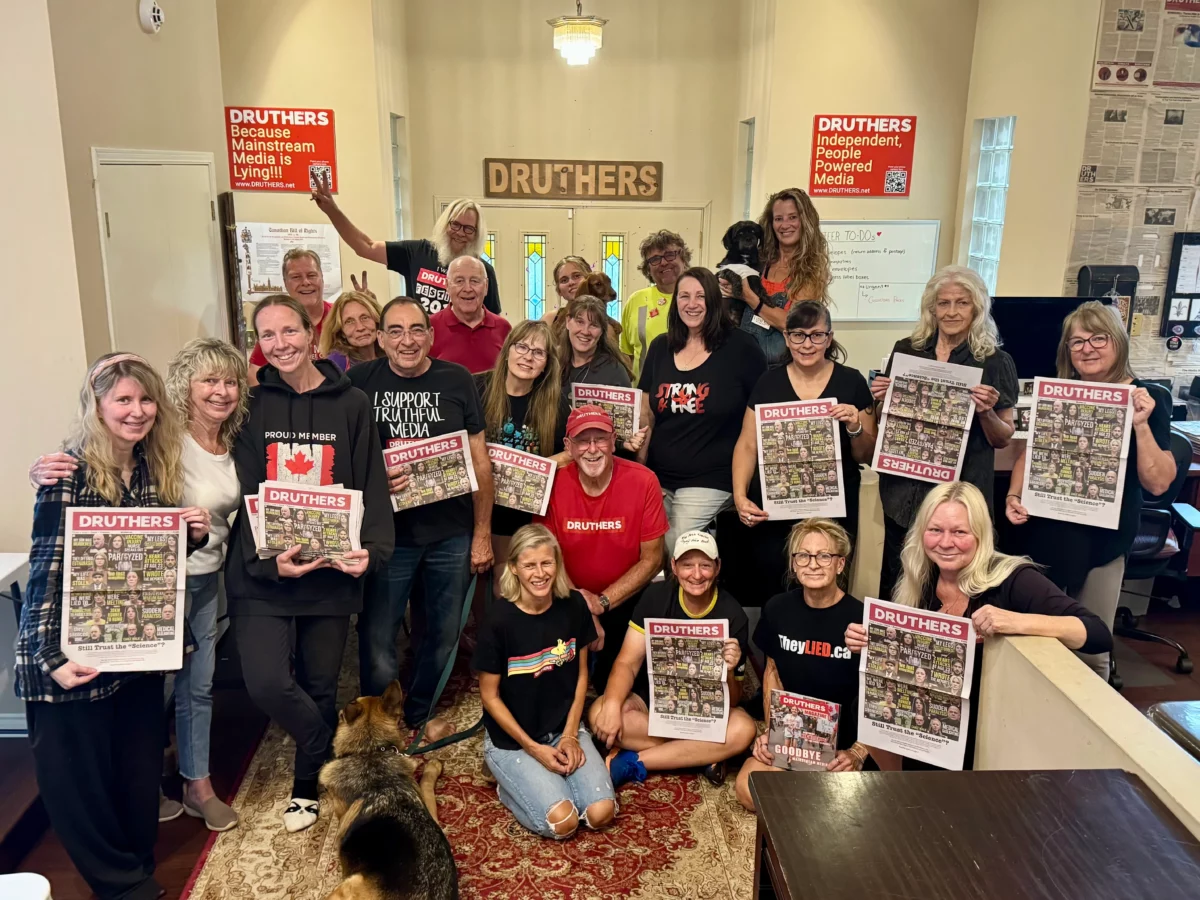
During a recent journey across Canada, I had the pleasure of spending a few days visiting my sister Kristy and the group of people who run Druthers Newspaper. I came away from that visit with something I hadn’t particularly expected: a renewed appreciation for the possibilities of human cooperation.
What impressed me most wasn’t a particular political position, a shared belief, or an interpretation of world events. It was something much more immediate and personal: the atmosphere in which people lived. Here were individuals of different ages, backgrounds, and nationalities sharing their lives in an atmosphere of friendship, mutual respect, and acceptance.
There was a sense of belonging. People seemed comfortable with one another, cooperating in the ordinary activities of daily life. It wasn’t a commune or an attempt to establish some ideal society. It was simply a group of people living together harmoniously. And I found it rather inspiring.
Of course, a visit of a few days offers only a glimpse into the lives of others. Every community has its challenges, disagreements, and difficulties. I wouldn’t presume to know all the complexities of the relationships I witnessed. But what I did see was worth appreciating. And it got me thinking about the world we are creating.
Much of the information we encounter each day concerns things that are going wrong. We read about corruption, dishonesty, exploitation, conflict, injustice, and the failures of institutions. These are important matters. They deserve attention, investigation, and public discussion. Independent journalism has a valuable role to play in questioning accepted explanations, examining the exercise of power, and bringing neglected concerns into public view.
But there is another kind of story that deserves our attention as well. It is the story of what people are doing right. Everywhere, often without recognition, people are helping neighbours, caring for those who are vulnerable, overcoming differences, building friendships, and finding practical ways to improve their communities.
These activities may not attract the attention given to conflict and controversy, but they are no less a part of the world in which we live. And perhaps they deserve to be celebrated more often.
Consider the possibilities when people of different nationalities, generations, backgrounds, and experiences find ways to cooperate. They need not agree about everything. They need not share identical beliefs, political opinions, or interpretations of reality. What matters is their willingness to recognize one another’s humanity, to listen, to contribute, and to live with mutual respect.
In a world where differences so often become reasons for suspicion or hostility, such relationships offer something worth learning from.
I have become increasingly interested in how deeply interconnected our lives really are. None of us exists independently of the people and circumstances around us. Our lives are shaped by countless relationships, many of which extend far beyond our immediate awareness.
The food we eat, the homes we inhabit, the knowledge we acquire, and the communities we enjoy are all products of human cooperation extending across generations and around the world. We are individuals, certainly, but we are not isolated individuals. Our lives are intertwined. And perhaps recognizing that interconnectedness can help us become more thoughtful about how we treat one another.
A better society isn’t created only through legislation, elections, institutional reform, or the exposure of wrongdoing, important as those activities may be. It is also created through the ordinary ways we relate to the people around us. Through kindness. Through honesty. Through generosity. Through cooperation. Through a willingness to accept differences without allowing them to become barriers to friendship.
These qualities are not particularly dramatic. They rarely make headlines. Yet they are essential to the kind of world most of us would like to inhabit.
This brings me back to my visit with Kristy and her friends. What I witnessed was a small example of something with much larger implications. People from different walks of life were demonstrating, through their everyday relationships, that cooperation and mutual respect are not merely ideals to be discussed.
They are possibilities to be lived. And that seems to me a story worth telling.
Imagine how encouraging it might be if, alongside our investigations of society’s problems, we gave greater attention to examples of people finding constructive ways to live together—not as a substitute for examining what is wrong, but as a complement to that essential work.
We need to understand our problems. We also need examples that help us imagine solutions. We need to recognize injustice. We also need to celebrate kindness. We need to question institutions. We also need to appreciate the ordinary people who are quietly demonstrating what cooperation can accomplish.
After all, the world we hope to create isn’t simply something waiting for us in the future. In countless small ways, we are creating it already. And sometimes, as I discovered during those few days with my sister and her friends, we need only look around us to recognize it.
Perhaps one of the most powerful contributions we can make toward a better world is to demonstrate, in the way we live together, that a better world is possible.




Explore More...