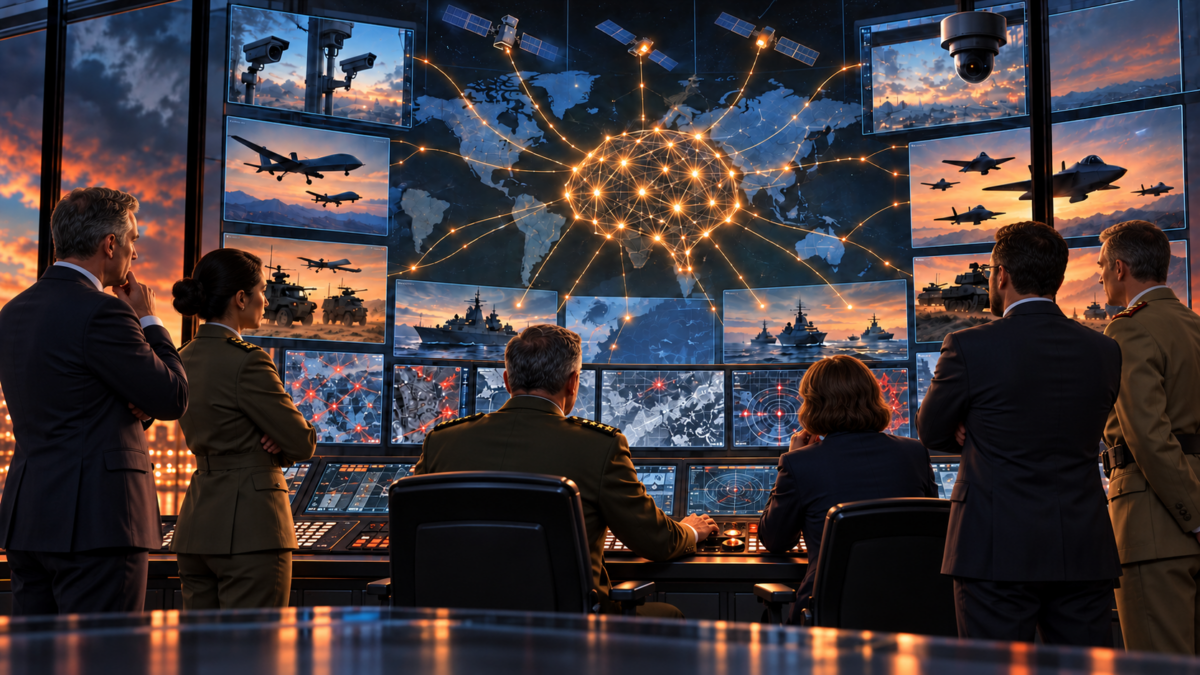
The-Crisis-Playbook-Has-an-AI-Problem2
The Crisis Playbook Has an AI Problem
By Carina Cedrechi via Instagram
I have a theory. The next manufactured crisis is going to malfunction. Not stumble, not underperform. Malfunction so spectacularly that somebody in a fluorescent-lit strategy room is going to be staring at a spreadsheet wondering why the human livestock stopped following the behavioural model.
Because for decades power has operated on something incredibly simple: predictability. Raise this price, people do that. Create this fear, people accept that. Remove this comfort, people become desperate enough to tolerate something they would have rejected six months earlier. Make survival slightly harder and suddenly, terrible working conditions start looking like blessings.
Keep people exhausted, indebted, distracted, overweight, underpaid, overstimulated and scared enough, and, theoretically, they become wonderfully manageable: human beings reduced to little economic laboratory rats. Pull lever. Release anxiety. Observe behaviour. Adjust interest rates. Repeat. Except somebody forgot one microscopic detail: the rats have Wi-Fi now. And worse, they have AI.
I genuinely think 2020 broke something in the psychological machinery that cannot easily be repaired. Whatever anybody believes about the pandemic itself, millions of people experienced the same bizarre historical interruptions simultaneously. Normal life stopped. People went home. Schedules disappeared. Work changed. Institutions contradicted themselves. People suddenly had ungodly amounts of time to sit quietly and think. Which apparently was the most dangerous side effect imaginable.
Because once people discovered that enormous portions of modern life were simply arrangements we collectively agreed to participate in, something woke up. The rebellious streak came back. The pressure cooker started hissing. People began asking questions they had been too busy commuting 45 minutes to work to ask before.
Why am I spending my entire life working? Why does productivity keep increasing while my purchasing power disappears? Why does everything somehow require another subscription? Why am I paying somebody else’s mortgage through rent while being told I cannot qualify for my own? Why does every technological advancement supposedly save labour while everybody somehow feels more exhausted?
And now imagine trying to use the old psychological playbook on that population. Fine. Make them poorer. They’ll work harder. Oh, sweetheart, you may have accidentally created people who would rather build six weird internet businesses from their kitchen table than return to your beige cubicle under fluorescent lighting while Kevin from regional management explains company culture.
“We’ll automate their jobs.” Fantastic. We’ll automate ours too. “We’ll use algorithms to manipulate information.” Cute. We have algorithms now. “We’ll use artificial intelligence.” So will we.
And that is the hilarious part. AI may have been envisioned by some institutions and corporations as the ultimate efficiency machine. Analyze populations, predict behaviour, automate labour, target advertising, optimize persuasion, eliminate employees, squeeze productivity until the spreadsheet starts smoking. But regular people got access to it too.
That changes everything because now the cashier can learn coding. The construction worker can understand contract language. The mother working from home can build a business plan in 30 minutes. The teenager can learn economics without paying somebody $80,000 for permission to read the same concepts. The employee can analyze their own employment agreement. The citizen can take a 900-page document written in bureaucratic hieroglyphics and say, “Explain this to me like I’m five.”
And suddenly the priesthood of complexity has a problem. Knowledge used to have toll booths. Now, people are driving through the grass.
And yes, AI uses enormous infrastructure. Yes, data centres consume electricity and water. Yes, there are serious environmental questions surrounding this technology. Those conversations matter. Gigantic corporations automate half the planet. But telling ordinary people, “You personally should abandon one of the most powerful information tools ever placed into public hands because the infrastructure has environmental costs,” is going to receive approximately the reaction you would expect.
Absolutely not. Fix the infrastructure. Improve cooling. Build cleaner energy. Regulate waste. Demand efficiency. But do not hand corporations a technological nuclear reactor and then lecture ordinary people because they plugged in a toaster.
For now, AI against AI. Algorithm against algorithm. Information against information. Automation against automation. You built the machine. People learned how to drive it.
And that is why I think the next major attempt to psychologically squeeze populations may produce outcomes nobody modelled correctly. Because the models were trained on yesterday’s humans. Humans who believed institutions automatically knew better. Humans who depended on gatekeepers for specialized knowledge. Humans who could be isolated informationally. Humans who thought changing careers required another degree. Humans who believed rebellion required thousands of people standing together physically.
That human being is disappearing. Now, one pissed-off person with Wi-Fi, caffeine, three browser tabs and artificial intelligence can become a researcher, designer, marketer, analyst, editor and entrepreneur before lunch.
Good luck modelling that. The pressure cooker already exploded once. People remember. People compare notes. People screenshot everything. People archive everything. People remix everything. And perhaps most dangerously for anybody relying on predictable human behaviour, people are starting to realize that systems only function because millions of ordinary human beings wake up every morning and agree to keep operating them.
So if someone somewhere believes the next crisis will automatically make everyone quieter, poorer, more obedient and easier to manage, they may want to update the software. The population updated first. And the machine you thought would make humanity easier to control may become the exact machine humanity uses to understand the control panel.
That would be the historical joke of the century. You built artificial intelligence to study human behaviour, and humans turned around and used it to study you.
Originally posted to Instagram @carinalh2014





Explore More...