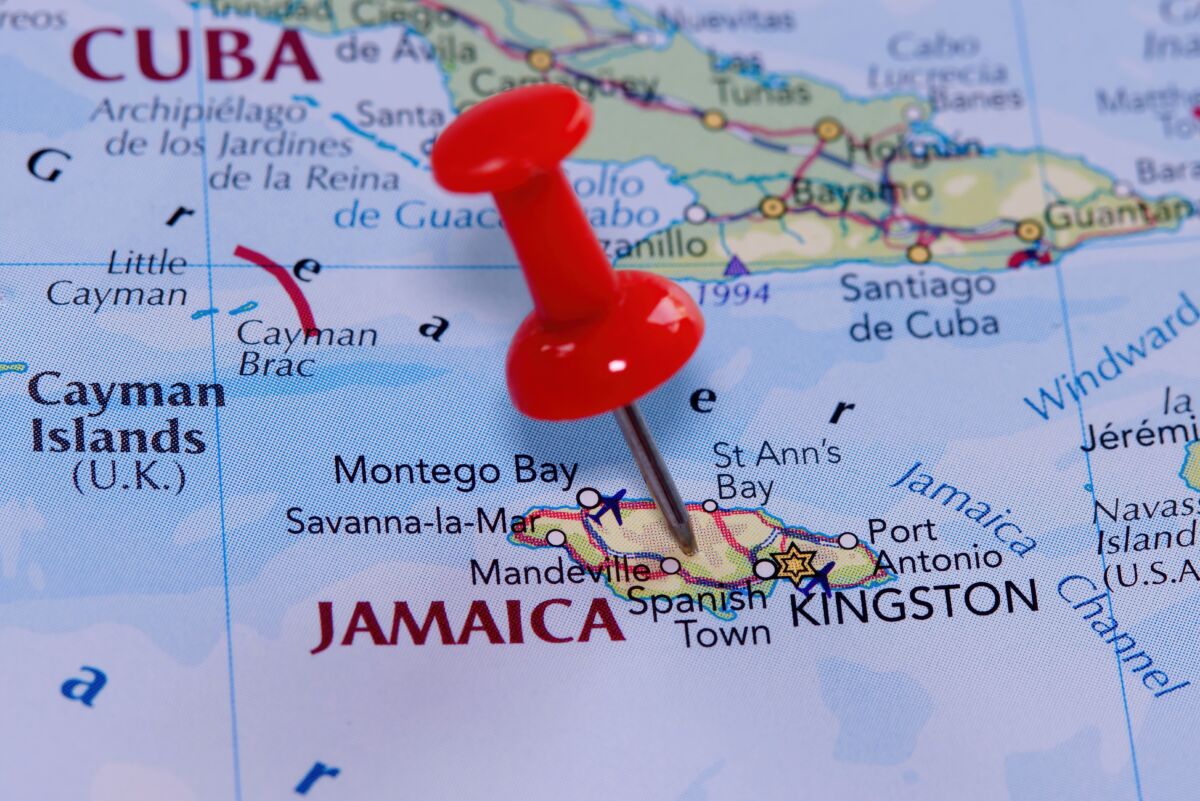
Jamaica-Takeout-and-Takeover
Jamaica: Takeout and Takeover
By Lynn Davis
A Storm Beyond Measure
The devastation is beyond the beyond. Hurricane Melissa hit Jamaica late Monday, October 27, 2025, and into Tuesday morning, October 28, as a Category 5 hurricane with record winds of 185 mph. Over 30 inches of rain fell onto the island within a 24-hour period.
The already saturated soil from fall rains could not hold any more moisture, and as a result, major flooding occurred. Horrendous mudslides from the beautiful Jamaican hills washed over low-lying communities. The sheer force of the wind seared vegetation so drastically, it appears to have been set on fire. Agriculture on the island was wiped out.
The southern and western parts of the island took the worst hit. Coastal towns like Black River in the south and Montego Bay in the west were directly targeted by Melissa’s eye and are now unrecognizable. Towns on the northern shore experienced Melissa as a Category 3 hurricane as she exited the island and headed for Cuba.
The damage on Jamaica’s north shore is significant but does not compare with that in the south and west. Eastern Jamaica, where the capital city Kingston is located, received strong winds and rain, but hydro in this region was back up within 24 hours, and with minimal work, roads became passable. The death toll on the island continues to climb. We may never know the exact numbers, but as of November 4, at least 75 people have been confirmed dead.
Within 24 hours of Melissa’s exit, the entire island was declared a disaster area by Jamaican Prime Minister Dr. Andrew Holness. By Thursday, October 30, cleanup began as the Jamaican government led efforts to clear roads and deliver essentials—food, water, medical supplies—to people stranded in areas inaccessible by roads.
Airplanes packed with supplies took off from Miami and landed at Kingston International Airport. After unpacking their cargo, they took on numerous tourists stranded in Jamaica because of the storm.
Don’t lose touch with uncensored news! Join our mailing list today.
As of the time of the hurricane, there were approximately 25,000 tourists and students visiting Jamaica.
From Relief to Redesign
On Friday, October 31, Prime Minister Holness made a public statement: “We’re now into the relief phase of our recovery plan, which is the immediate provision of humanitarian relief. So, we’re looking to have food, medicine, temporary shelter, and any other relief necessary for the preservation of life and to provide our citizens with even the basic conveniences.
The second phase, which runs parallel to the first phase in some instances, would be the clearing of roads that are blocked and working to restore communications and electricity. The third phase would be the assistance in building, so helping persons to restore their roofs and their housing. Then once we are complete with that, then we will move intensely into the rebuilding phase, which would be now a strategic approach to restoring communities, business hubs, urban spaces and the like.”¹
Prime Minister Holness assures his citizens and the world that Jamaican government plans are quickly forthcoming to “Build Forward Better.”²
Sound familiar?
It rings with eerie resonance to the chant “Build Back Better,” engraved into the soft recesses of our brains like grooves in a vinyl record during the aftermath of Covid-19.
But the phrase “Build Back Better” has an interesting history. It first appeared in a World Bank report published in May 2005, following the 2004 Indian Ocean tsunami.³ President Bill Clinton strategically exercised the phrase throughout his presidency. And although the phrase was initially used in disaster risk management and international development circles, it was later adopted by political leaders during Covid-19 as a slogan for economic recovery.
The Global Blueprint
“Vision 2030 Jamaica” is Jamaica’s first long-term strategic development plan and covers a 21-year period, 2009–2030. It embodies the plans and processes for the realization of a collective vision (whose vision?) encapsulated in the statement: “Jamaica, the place of choice to live, work, raise families and do business.”
In 2015, Jamaica, as part of the 193 member states of the United Nations, adopted the 2030 Agenda for Sustainable Development and its 17 Sustainable Development Goals (SDGs). The SDGs are now integrated in the implementation of “Vision 2030 Jamaica.” Its slogan is chilling: “Vision 2030 Jamaica…advancing the achievement of the SDGs…leaving no one behind!”⁴ No Jamaican will be “left behind,” whether he or she likes the idea or not.
Jamaicans are a proud and resilient people. They have risen strong in spite of a brutal and incredibly racist history. Poverty and hardship, trial and tribulation have been the norm for Jamaican folk since the “days of slavery” began over 500 years ago. They have weathered numerous hurricanes and have consistently rebuilt and reconstructed their lives the way they want and need to live and be.
But Melissa and her fallout are different. Her path of destruction seems almost deliberate. Small communities in the south and west of the country were obliterated, while eastern regions, including the capital city of Kingston, where all national government resides, were left comparatively unscathed.
Rebuilding or Relinquishing?
Jamaicans who have lost their livelihoods, homes, and family members currently harbour only one thought: survival. They are busy trying to stay alive. They have trusted their government in the past and feel they need to do so now more than ever.
But it is becoming evident that rebuilding homes, infrastructure, agriculture, businesses, commerce—every part of the life of every Jamaican—is going to require tremendous effort and amounts of money, more than international aid and relief organizations can possibly contribute.
The average Jamaican citizen is unaware of the looming and drastic changes in lifestyle that accompany sustainable development goals—changes being instituted by a government that has bowed its head to powerful international systems with agendas void of empathy and compassion, agendas ripe with a new form of slavery that include total surveillance, digital ID, and 15-minute cities.
The magnificent, colourful, welcoming, and heart-warming Jamaican culture has been uprooted like the enormous trees during the storm. The physical landscape in Jamaica now reflects the despair of the ones who live in its once beautiful embrace.
Will Jamaicans come to the realization that they are in more peril now than they ever were during the terrifying incident of Hurricane Melissa?
- youtube.com/watch?v=2U9FEtmL9K
- https://www.jamaicaobserver.com/2025/11/05/build-forward-better/
- “Rebuilding a Better Aceh and Nias: Preliminary Stocktaking of the Reconstruction Effort Six Months After the Earthquake and Tsunami”
- vision2030.gov.jm






Explore More...