Holding-the-Food-Industry-Accountable-at-Last
Holding the Food Industry Accountable at Last
A Historic Lawsuit and the Case for Real Food
Note: This article is not intended to be used in place of individual medical advice.
San Francisco has filed the first major US lawsuit, which directly accuses ultra-processed food (UPF) corporations of engineering a public health crisis–and of deliberately obscuring the consequences.
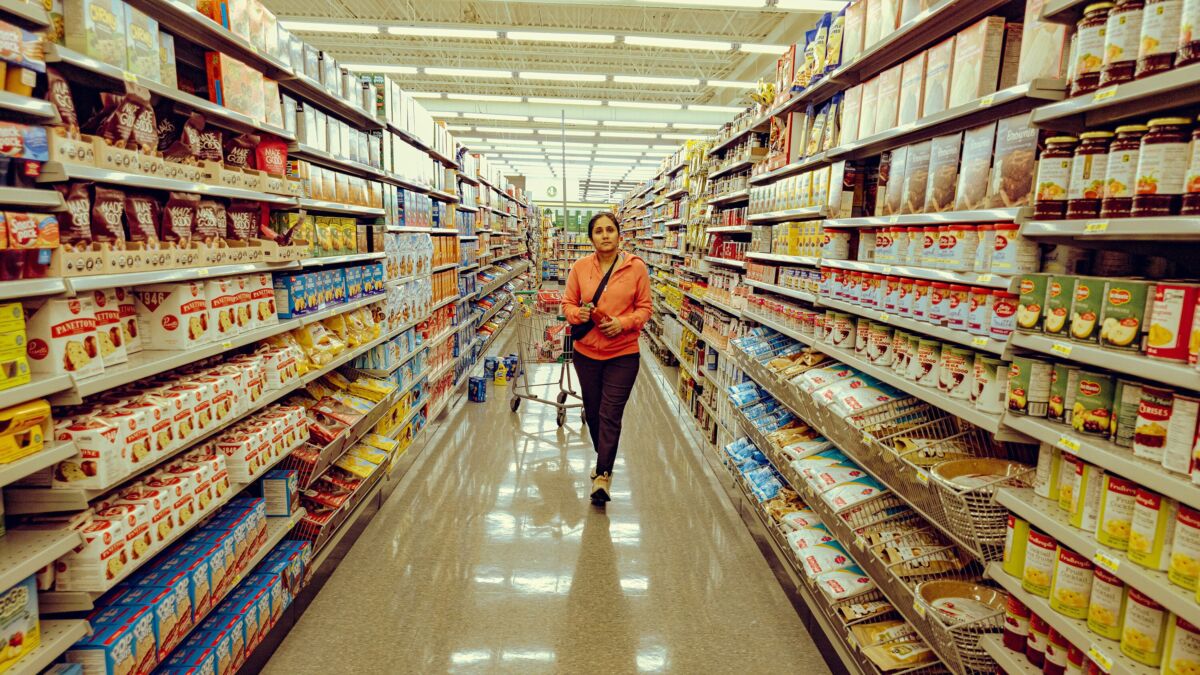
For decades, a silent, slow-motion public health catastrophe has unfolded on our grocery store shelves and in our kitchens. The culprits? Ultra-processed foods (UPFs). These are engineered substances of industrial ingredients, often laden with additives, unhealthy fats, refined sugars, and salt: designed to be hyper-palatable, cheap, and endlessly shelf-stable.
In December 2025, a significant shift occurred. The San Francisco City Attorney’s Office filed a groundbreaking lawsuit against the titans of the UPF industry: Kraft Heinz, Mondelez, Coca-Cola, PepsiCo, General Mills, Nestlé USA, Kellogg, Mars, ConAgra, and Post Holdings (San Francisco City Attorney’s Office, 2025).
In the words of San Francisco City Attorney David Chiu:
“They took food and made it unrecognizable and harmful to the human body. We must be clear that this is not about consumers making better choices. Recent surveys show Americans want to avoid ultra-processed foods, but we are inundated by them. These companies engineered a public health crisis, they profited handsomely, and now they need to take responsibility for the harm they have caused.”
Let’s break down why this is a watershed moment.
The Legal Case: Deception, Addiction, and Disease
The lawsuit frames UPFs not as mere “junk food,” but as defective and unreasonably dangerous products. The core allegations read like a corporate malfeasance playbook:
- Deceptive Advertising: Marketing sugary cereals, snack packs, and sodas as “fun,” “wholesome” or even “healthy,” normalizing them as part of a regular diet.
- Failure to Warn: Withholding from consumers the well-established scientific evidence linking high UPF consumption to chronic disease.
- Targeting the Vulnerable: Designing marketing campaigns that disproportionately impact children, low-income families, and communities of colour.
- Negligence & Breach of Warranty: Selling products that are fundamentally unfit for their ordinary intended use – i.e. of sustaining human health.
The goal is not just financial penalties, but structural change. This would mean clear warnings, an end to deceptive marketing, and accountability for the true cost of these products.
N.B. At the time of writing, the case is still at an early procedural stage. Therefore, as yet, no substantive court rulings have been made public.
The Unavoidable Science: UPFs and the Wave of Chronic Disease
This lawsuit is possible because the science linking UPFs to chronic disease is now overwhelming. These are not just empty calories, but biologically disruptive substances.
- Landmark Studies: A seminal 2019 controlled trial by Hall et al. provided causal evidence. Participants on a UPF diet consumed around 500 more calories per day and gained weight compared to those on a minimally processed diet, despite the menus being matched for presented energy, macronutrients, sugar, fat, and fibre. The findings suggest that the body processes these engineered foods differently.
- Epidemiological Evidence: Large-scale observational studies consistently find associations between high UPF consumption and cardiovascular disease (Srour et al., 2019), as well as higher overall cancer incidence and cancer mortality (Chang et al., 2023). Elsewhere, there have been reported connections with obesity, type 2 diabetes, depression, and all-cause mortality. A 2024 review in The British Medical Journal (BMJ) linked higher UPF intake with 32 harmful health outcomes: this includes cardiovascular death, with relative risks up to ~50% higher in high-exposure groups (Lane et al., 2024).
- The Mechanism: UPFs are designed to override our natural satiety signals. Their physical structure (soft, low-chew) and chemical makeup (flavour enhancers, emulsifiers) drive overconsumption (Monteiro et al., 2019). Furthermore, additives and processing byproducts may promote inflammation (Zinöcker & Lindseth, 2018) and disrupt gut microbiota (Chassaing et al., 2017).
The lawsuit rightly identifies the result: a colossal man-made health crisis. Rates of childhood obesity, type 2 diabetes (once called “adult-onset”) and fatty liver disease have skyrocketed, setting our youth on a trajectory of lifelong illness.
The Case for Regenerative, Decentralized Food Systems
Holding corporations accountable is a critical first step. But the second, more profound step is to rebuild our relationship with food at its source. To truly heal our bodies and our planet, we must transition from the kind of industrial agriculture which relies on synthetic pesticides, herbicides and fertilizers to grow the corn, soy and wheat that become UPFs, and move towards a decentralized, chemical-free, regenerative model.
Why This Matters for Human Health
Our basic micronutrient needs—vitamins, minerals, antioxidants— are met not by fortified, processed substances, but by nutrient-dense whole foods grown in healthy soil. Synthetic chemicals deplete soil microbiology, which in turn reduces the nutrient content of our crops (Montgomery & Biklé, 2022). Supporting local, organic and regenerative farmers is the direct path to supplying people with the foundational nutrition required for immune function, cognitive health and metabolic resilience.
Why This Matters for Our Living Planet
Industrial monoculture is a war on biodiversity. Synthetic pesticides and herbicides are indiscriminate killers, devastating populations of insects (including vital pollinators like bees), reptiles, amphibians, birds and mammals that rely on diverse plant life. They contaminate waterways and degrade topsoil.
A decentralized, chemical-free agricultural system does the opposite:
- It supports insects. By eliminating neonicotinoids and other pesticides, we allow pollinator and beneficial insect populations to recover.
- It protects wildlife. Hedgerows, diverse crop rotations and healthy soil create habitat for birds, small mammals and reptiles.
- It nourishes plants and soil. Regenerative practices are proposed to sequester carbon, improve water retention, and create a resilient, living ecosystem (Rhodes, 2017).
Vote with Your Fork and Your Voice
- Support the lawsuit. Follow the case and talk about it. Public pressure matters.
- Boycott the defendants’ products. This is the most direct economic signal. Read labels and avoid brands owned by these conglomerates.
- Invest in real food. Prioritize your food budget towards:
- Local farmers’ markets & community-supported agriculture (CSAs). Build a direct relationship with those who grow your food.
- Organic and regenerative organic certified. Support farming that rebuilds soil and bans synthetic inputs.
- Whole, minimally processed foods. Cook at home, for this is the ultimate act of food sovereignty.
- Advocate. Demand better school lunches, honest food labeling, and agricultural policies that support small-scale, sustainable farmers over industrial conglomerates.
The future of food must be real, regenerative, decentralized and responsible. It’s time we all demanded nothing less.
The San Francisco lawsuit is a crack in the dam. It is a long-overdue attempt to hold powerful actors accountable for profiting from the destruction of public and planetary health. But the real power to build a better system lies in our daily choices. Let’s choose food that heals our bodies, nurtures our children, and protects the intricate web of life we all depend on.
World Council for Health stands for a Better Way.
References:
Chang, K., Gunter, M. J., Rauber, F., Levy, R. B., Huybrechts, I., Kliemann, N., Millett, C., & Vamos, E. P. (2023). Ultra-processed food consumption, cancer risk and cancer mortality: a large-scale prospective analysis within the UK Biobank. eClinicalMedicine, 56, 101840. https://doi.org/10.1016/j.eclinm.2023.101840
Chassaing, B., Koren, O., Goodrich, J. K., Poole, A. C., Srinivasan, S., Ley, R. E., & Gewirtz, A. T. (2015). Dietary emulsifiers impact the mouse gut microbiota promoting colitis and metabolic syndrome. Nature, 519(7541), 92–96. https://doi.org/10.1038/nature14232
Hall, K. D., Ayuketah, A., Brychta, R., Cai, H., Cassimatis, T., Chen, K. Y., Chung, S. T., Costa, E., Courville, A., Darcey, V., Fletcher, L. A., Forde, C. G., Gharib, A. M., Guo, J., Howard, R., Joseph, P. V., McGehee, S., Ouwerkerk, R., Raisinger, K., … Zhou, M. (2019). Ultra-processed diets cause excess calorie intake and weight gain: An inpatient randomized controlled trial of ad libitum food intake. Cell Metabolism, 30(1), 67-77. https://doi.org/10.1016/j.cmet.2019.05.008
Lane, M. M., Gamage, E., Du, S., Ashtree, D. N., McGuinness, A. J., Gauci, S., Baker, P., Lawrence, M., Rebholz, C. M., Srour, B., Touvier, M., Jacka, F. N., O’Neil, A., Segasby, T., & Marx, W. (2024). Ultra-processed food exposure and adverse health outcomes: Umbrella review of epidemiological meta-analyses. BMJ, 384, e077310. https://doi.org/10.1136/bmj-2023-077310
Monteiro, C. A., Cannon, G., Levy, R. B., Moubarac, J.-C., Louzada, M. L. C., Rauber, F., Khandpur, N., Cediel, G., Neri, D., Martinez-Steele, E., Baraldi, L. G., & Jaime, P. C. (2019). Ultra-processed foods: What they are and how to identify them. Public Health Nutrition, 22(5), 936–941. https://doi.org/10.1017/S1368980018003762
Montgomery, D. R., & Biklé, A. (2022). What your food ate: How to heal our land and reclaim our health. W. W. Norton & Company.
People of the State of California, acting by and through the San Francisco City Attorney (Plaintiff). (2025, December 2). Complaint for violation of California Unfair Competition Law and public nuisance: San Francisco v. The Kraft Heinz Company, Mondelez International, Inc., Post Holdings, Inc., The Coca-Cola Company, PepsiCo, Inc., General Mills, Inc., Nestlé USA, Inc., Kellanova; WK Kellogg Co.; Mars
Originally published at substack.com/@worldcouncilforhealth









Explore More...