From-Census-to-Surveillance
From Census to Surveillance
By Sandra Finley
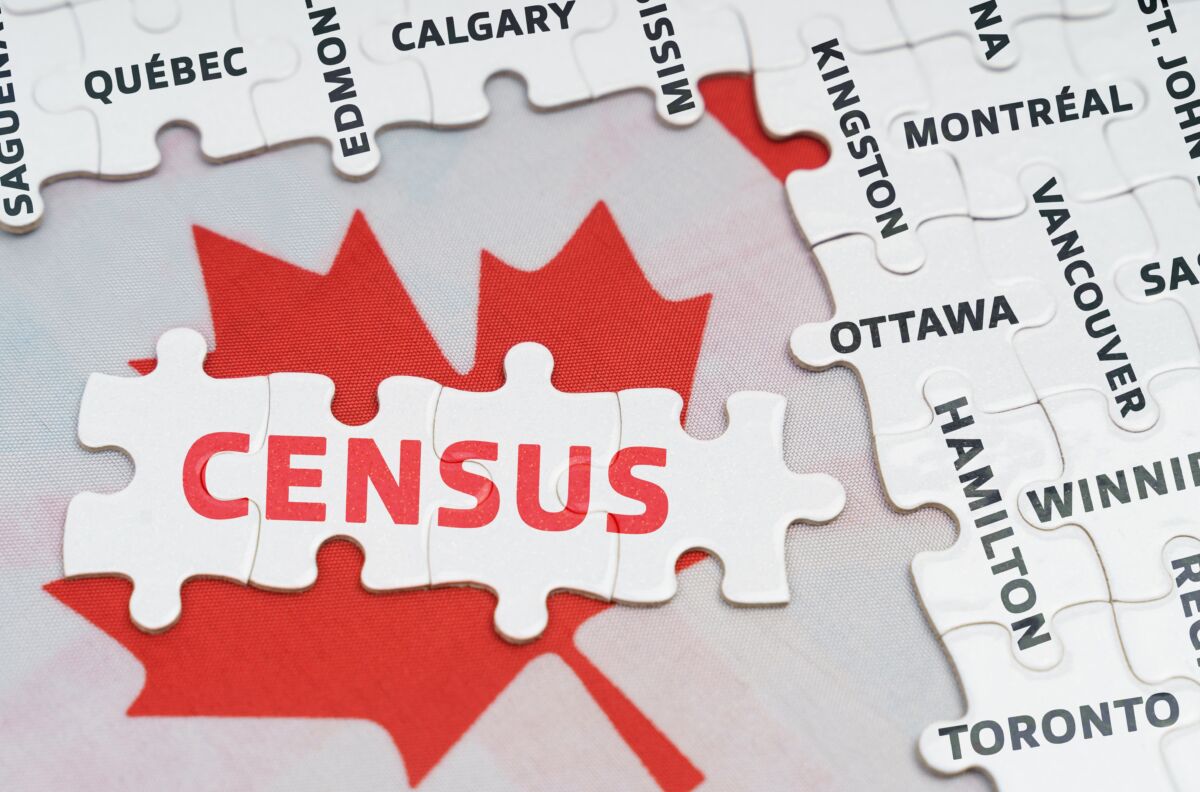
Canada’s next census will take place in May 2026, as part of the country’s regular five-year census cycle. Statistics Canada arrived in my community in early March. They are currently hiring workers to carry out census work.
For most Canadians, the census appears routine. A form arrives. Questions are answered. Life moves on.
But over the past two decades, the operation behind that form has changed dramatically.
The word census no longer tells the whole story.
The Expanding Data Collection System
The traditional census conducted every five years is now only one part of a much larger system. Statistics Canada conducts continuous surveys and ongoing data collection throughout the year, gathering information about employment, finances, housing, health, education, and spending habits.
At the same time, Canada participates in the Five Eyes intelligence alliance (FVEY) with the United States, the United Kingdom, Australia, and New Zealand.
These realities raise an obvious question: How much personal information is the modern state capable of collecting—and what happens to that information once it is collected?
Canadians Have Raised the Alarm Before
Public concern about government data collection is not new.
In 2018, Statistics Canada proposed obtaining detailed banking records from approximately 500,000 Canadian households in order to analyze spending patterns.
The proposal triggered widespread public backlash.
A poll reported by The Globe and Mail found that a strong majority of Canadians opposed the plan to collect banking data from financial institutions.¹
The controversy quickly reached Parliament. The Senate of Canada launched a committee investigation into Statistics Canada’s request for access to Canadians’ banking data.²
One senator reportedly said he was “repelled” by the proposal to obtain detailed spending records from banks.³
Although the plan was eventually abandoned, the episode left many Canadians wondering how far government data collection might expand in the future.
The Role of Private Contractors
Another aspect of the census that receives little public attention is the role played by private contractors.
For several census cycles, Statistics Canada contracted the defence giant Lockheed Martin to build components of the census data-processing system.
Government procurement records show that Lockheed Martin developed optical scanning and data-capture technology used to digitize census questionnaires beginning in the early 2000s.⁴ The company’s systems were used to convert millions of paper census responses into digital databases used by Statistics Canada.⁵
The involvement of one of the world’s largest defence and surveillance contractors in census infrastructure raised uncomfortable questions about data security and oversight.
Lockheed Martin has long been involved in intelligence and surveillance systems worldwide, supplying technology and infrastructure used by government customers including the U.S. National Security Agency (NSA), the United Kingdom’s Government Communications Headquarters (GCHQ), Canada’s Communications Security Establishment (CSE), Australia’s Australian Signals Directorate (ASD), and New Zealand’s Government Communications Security Bureau (GCSB).
Whether such contractors should have any role at all in systems that process information about millions of citizens remains a matter of debate.
Personal Information Banks
The scale of modern data collection becomes clearer when looking at government systems known as Personal Information Banks (PIBs).
These are large databases designed to store and organize information about individuals.
Government documentation lists numerous categories of personal data that may be stored in these systems, including:
- Biographical information such as family history, employment history, hobbies and interests
- Biometric information, including fingerprints, facial scans, blood type, and DNA
- Contact information such as addresses, phone numbers, and email accounts
- Financial information and credit history
- Criminal record checks or criminal history
- Medical information
- Employment records and disciplinary history
- Photographs and physical attributes
- Identification numbers such as Social Insurance Numbers
- Even “opinions or views of, or about, individuals.”
Taken together, these categories describe a remarkably detailed profile of a person’s life.
The Risk of Massively Organized Information (MOI)
Large centralized databases create what some critics describe as massively organized information; systems capable of storing extensive files on entire populations.
History offers uncomfortable reminders of how such systems can be used.
In his book IBM and the Holocaust, historian Edwin Black documented how census data and mechanized record-keeping systems were used by authoritarian regimes in the twentieth century to identify and track populations.⁶
Privacy researchers warn that surveillance systems do more than simply collect information—they change how people behave.
Security technologist Bruce Schneier writes in Data and Goliath that surveillance has a chilling effect on freedom because people modify their behaviour when they know they are being watched.⁷
When people believe their actions are constantly recorded, self-censorship becomes the norm.
Privacy and the Charter
Canada’s legal framework recognizes the importance of protecting personal information.
The Canadian Charter of Rights and Freedoms has been interpreted by courts as protecting what they call the “biographical core of personal information.”
In the Supreme Court decision R v Plant, the Court ruled that Section 8 protects information revealing intimate details of a person’s lifestyle.⁸
Government limits on Charter rights must meet the strict constitutional standard established in R v Oakes, commonly known as the Oakes Test.⁹
For critics of expanding data collection, the question is simple: How much personal information should citizens be compelled to disclose to the state?
A Debate That Isn’t Going Away
For many Canadians, the census is simply a practical tool used to guide public policy and allocate resources.
But others see the rapid expansion of data collection as a warning sign.
The concern is straightforward.
The more information about individuals that is stored in centralized databases, the more vulnerable those individuals may become to pressure, persuasion, or coercion.
You do not necessarily have to do anything wrong. Sometimes simply asking questions—or falling on the wrong side of political authority—is enough.
Rights that are not defended have a way of disappearing.
And once surrendered, they are rarely easy to reclaim.
- globalnews.ca/news/4599953/exclusive-stats-canada-requesting-banking-information-of-500000-canadians-without-their-knowledge
- sencanada.ca/en/newsroom/banc-senate-committee-to-probe-statistics-canada-request-for-canadians-banking-data
- publications.gc.ca/collections/collection_2019/sen/yc11/YC11-421-48.pdf
- straight.com/article-160168/lockheed-deals-buoy-census-holdouts
- www150.statcan.gc.ca/n1/en/pub/11-522-x/2003001/session2/7597-eng.pdf?st=foFA1cxB
- Edwin Black—IBM and the Holocaust
- Bruce Schneier—Data and Goliath
- Supreme Court of Canada—R v Plant
- Supreme Court of Canada—R v Oakes








Explore More...