Communities-Our-Only-Hope
Communities, Our Only Hope
By Stephen Clarke
I have been meaning to write about the state of community: why it’s essential, why it’s struggling in the West, and how we can rebuild it. I live in rural Ontario. After the pandemic, there was a huge move toward forming freedom groups and homesteading. Most of these groups have since disappeared or greatly diminished. Homesteaders either sold up and moved on or became disillusioned with community life.
This distresses me deeply. I believe community will be the only way we can thrive as governments grapple with debt, services become minimized, and infrastructure goes unmaintained. We must depend more on ourselves and each other to fill those gaps. Without community, there can be no future.
So who am I to discuss this? Thirty-five years ago, we moved to a small village on the Trent Canal system. I opened a barbershop which became a unique observational post and information hub. With interests in history, sociology, and anthropology, it was an excellent situation to observe community dynamics.
The population was around 1,500 souls: farmers, quarrymen, builders, service providers, and their families. Summer tourism bolstered numbers by several thousand. The retirement boom was just starting. The population is now around 5,500, projected to reach 15,000 by 2030.
Being the barber allowed me to cross the lines between locals and newcomers, making interesting friends and gaining real insight into how community actually works.
The Erosion of Connection
For decades we’ve moved away from real community, bit by bit. We’ve lost the connection between the life of the person delivering services and the service itself.
In smaller communities, there were maybe one or two plumbers and electricians. You not only received their services but saw them at school, the Christmas gala, the ice rink, the supermarket. You shared their joys and sorrows. They were real. If they hurt, the community hurt. Today, if the plumber breaks his leg, most people wouldn’t know or care. They just call the next one on the list.
This has led to a situation where neither service provider nor customer share empathy beyond politeness. Extended to all services and relationships, this creates subtle isolation.
Many who moved to rural areas did so because housing was cheaper. But they didn’t live in the community except weekends. Their homes became bedrooms and storage units. Their children were often latchkey kids, unsupervised much of the day.
Now we have communities in name only. People live close to each other without being close to each other. After a few generations, this becomes the default position. We no longer presume neighbours will be neighbourly.
That empathy between neighbours is the glue holding community together. I cut the hair of many retired teachers who all lamented that their biggest problem was getting pupils to work as a team. Everyone wanted to be the leader; no one would surrender that position for the project’s success. Power comes first; success is secondary. This attitude has serious implications for community success.
The Virtual Substitute
The lack of real community, combined with an inherent human need for it, finds relief in social media. Online communities like Facebook, YouTube, Telegram, and WhatsApp attempt to bridge that gap.
They’re seen as tools for community building, support groups, local initiatives, and business opportunities. In reality, these digital platforms lack the depth, perception, and empathy of human-to-human relationships. They disregard the values that govern our behaviour and miss the sublingual messages vital to conversation.
The Homesteading Experiment
During COVID we started homesteading and formed a local homesteader’s group with a website for selling, barter, trade, and information. We held monthly meetings for local members.
Many bought property quickly without experience. I visited homesteaders who had bought poor land and were struggling. They also underestimated how relentless this lifestyle can be. It’s not for the faint of heart. Hollywood has over-glamorized the situation, leading to stress when reality set in.
Things went well initially. Good networking on Telegram began. Different subgroups shared information—until differences of opinion appeared. The reaction to those differences was the problem.
COVID put the rise of the keyboard warrior on steroids. Someone would mention religion, LGBTQ, flat earth, the moon landing, and name-calling began. Fighting words you don’t recover from.
One key takeaway from my barbering experience: you don’t run off at the mouth to anyone. It’s toxic, and there may come a day when you’re in the ditch and the guy you lipped off to rides by on his tractor, waving with a grin.
If anything will destroy a community instantly, it’s that. Keeping a civil tongue builds character and good relationships. For us, the consequence was that meetings faded from lack of attendance when people faced explaining their comments face-to-face.
Community by Committee vs. Organic Growth
Forming community by committee is very different than having committees within a community. The village where I barbered had a great influx of retirees in the last ten years. They had a notion of community but no real experience making one. Their efforts turned into gentrification, creating a kind of Potemkin community.
Old Harold, at 90, was a parade regular on his restored Cockshutt tractor, dressed in coveralls, smoking, with his beagle baying behind him. After gentrification, the committee deemed Harold spoiled their parade and asked him not to attend. Harold was born in the community, farmed his whole life, helped build the community centre, and volunteered for every project. He was well-respected, a true character, and the salt of the earth. Unfortunately, he didn’t fit the “new” community model.
Another example: new church members formed a committee and decided to rescue a Syrian family. Shortly after, the church begged for volunteers to drive this family to nearby towns for ESL, companionship, and worship. This became a real burden. The committee only cared about how noble they looked, but were oblivious to making the family’s start incredibly difficult.
These families should be brought to cities with special services, plentiful public transit, and established communities of their countrymen. The church could have raised funds for organizations equipped to help new arrivals.
Ironically, the church already had parishioners in dire straits. Supporting them should have been first priority. A badly conceived act of generosity divided parishioners into two camps. Hence the saying: “The road to hell is paved with good intentions.”
True Community
In truth, a community builds itself based on mutual need. When I arrived 35 years ago, everyone knew each other and was committed to the community’s success. People cleaned vacant lots, picked up litter, and volunteered without being asked. When decisions were made, the council held town hall meetings. Issues were discussed publicly for weeks. Everyone wanted what was best for the village, not themselves.
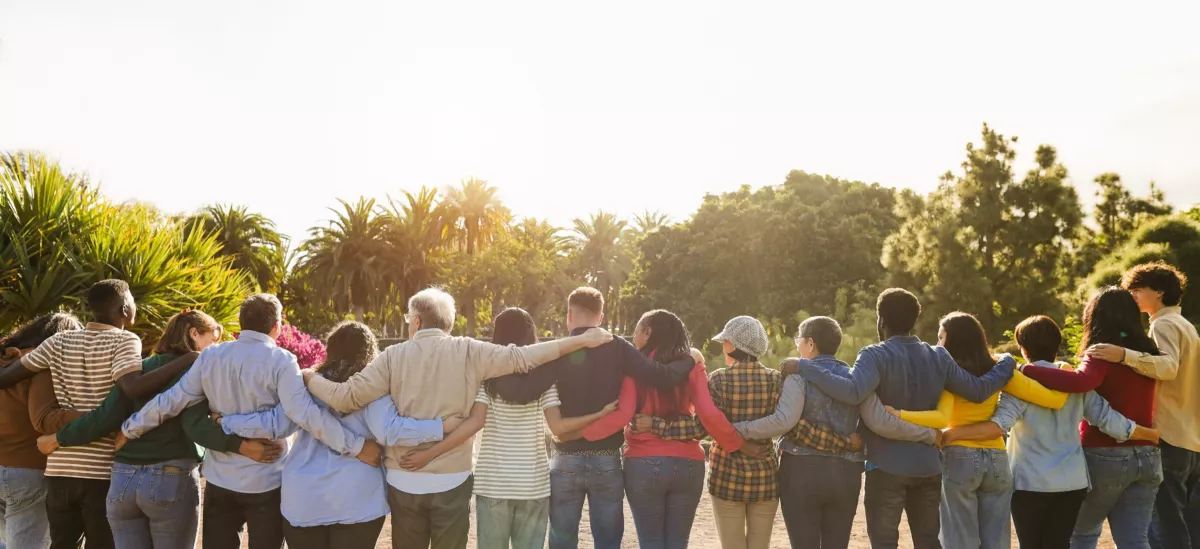
Community is not built by committee but by hundreds of selfless acts for the betterment of all. Community wasn’t something people talked about but lived daily.
The Path Forward
As a species, we crave community. We need the safety and sense of belonging it brings. Communities form organically, especially in times of need, and grow based on those needs. We must avoid toxic behaviours, especially harsh, thoughtless words.
The only way to survive what’s coming is by setting aside differences and rebuilding real, functional community.
Let us hope our leaders have enough common sense to abandon this rush to digital oblivion. Let us hope they see that big is bad, and small is smart.



Explore More...