The-Broadening-Scope-of-MAiD
The Broadening Scope of MAiD
By Liam DeBoer | BlendrNews.com
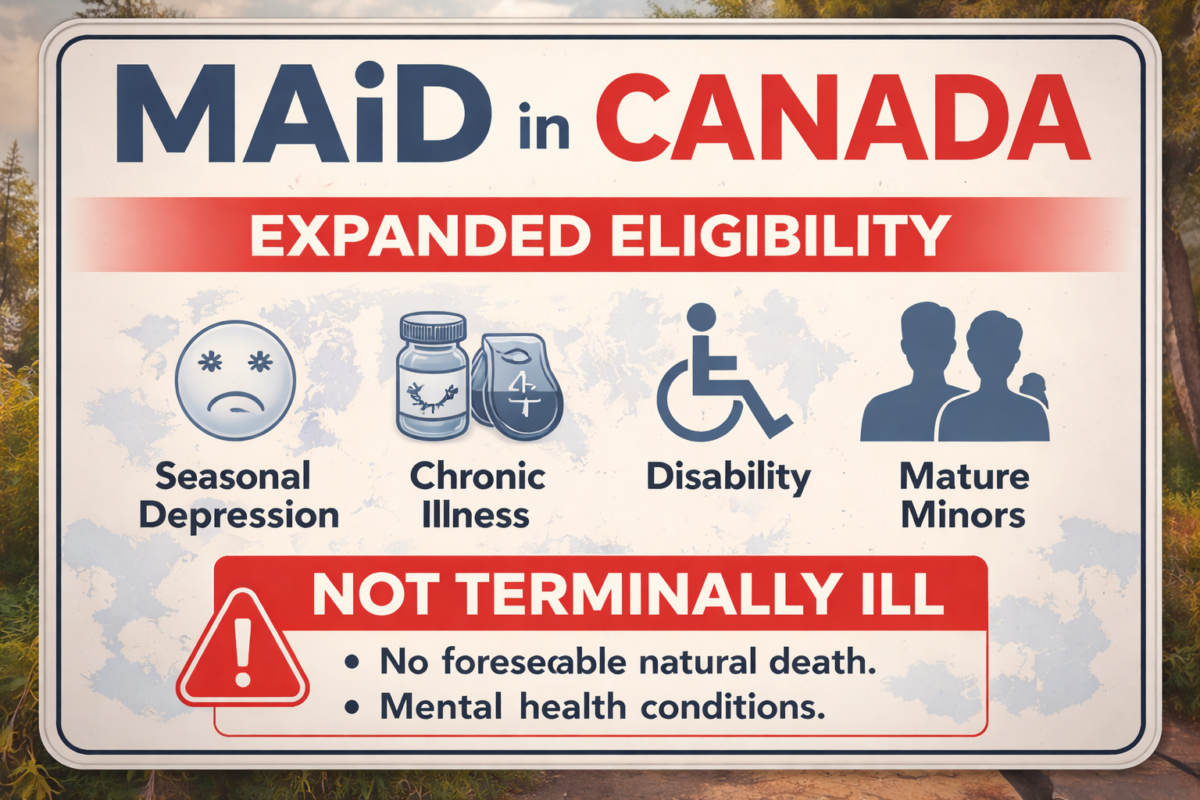
Canada is now making global headlines for euthanizing a 26-year-old who struggled with seasonal depression. Kiano Vafaeian was blind and lived with type one diabetes. His depression intensified during the winter months, but he was not terminally ill.
In previous years, when his family intervened, he stabilized. He trained at a gym, moved into a condo, and spoke about saving money so he and his mother could travel. There were real stretches where life appeared to be rebuilding itself.
Yet under Canada’s Track Two MAiD framework, reserved for those whose natural death is not reasonably foreseeable, he was approved within a 90-day assessment window. His parents say they were not informed until after “the procedure” was complete.
They further allege that Dr. Ellen Wiebe, who has administered MAiD to more than 500 patients, coached their son on how to qualify despite his condition not being terminal. What was once framed as a narrow safeguard for the dying now appears increasingly available to the distressed.
His story unfolds as parliamentary committees advise expanding euthanasia to so-called “mature minors”—children deemed capable of consenting to end their lives. They’ve already argued that age alone should not determine eligibility, while advocacy groups press to lower the threshold even further.
The trajectory is difficult to ignore. Canada now euthanizes more than 16,000 people a year—roughly 5% of all deaths nationwide. What was introduced as a narrow, exceptional measure for the terminally ill has expanded into a defining feature of the “healthcare” landscape.
A policy framed as “mercy in the rarest cases” is steadily normalizing state-administered death as a solution to any and all levels of suffering.
Originally published on Instagram @liam_out_loud









Explore More...